
AIVA – AI Learning Platform
Designed an all-in-one educational companion that increased teacher efficiency and student engagement through AI-powered lesson planning and interactive learning.
Overview
The core challenge was to re-imagine digital learning by shifting the focus from traditional grading to future-ready skills like resilience, collaboration, and creativity. The goal was to build a unified system that alleviates teacher tool-overload while driving interactive, playful engagement for students.
“The best learning tools don't ask for attention — they give it back to the teacher.”
Strategic Alignment & Discovery
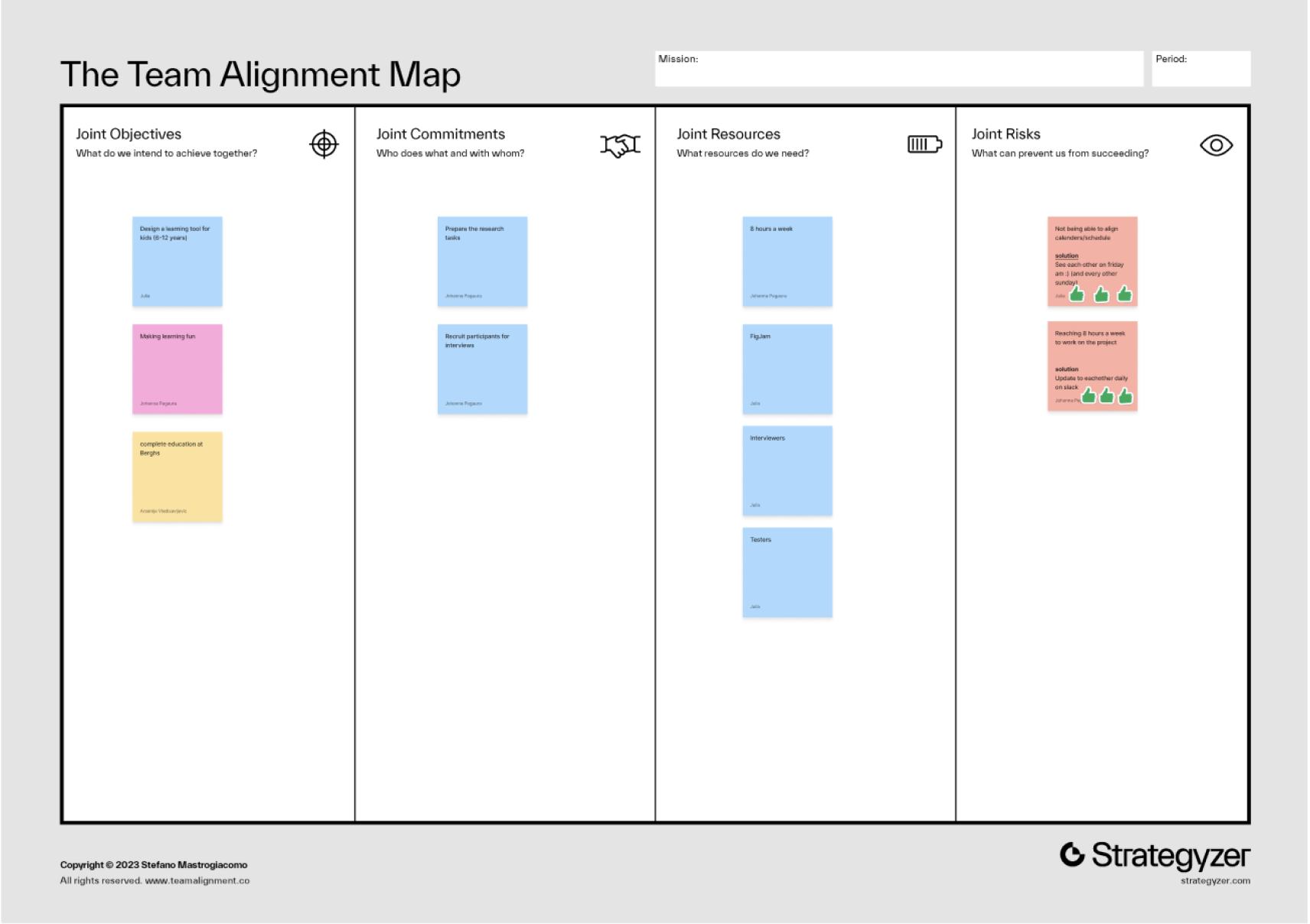
Team Foundation
Kicked off the project using Team Alignment Maps and Contracts to define shared goals, mitigate risks, and establish a focused baseline before diving into research.
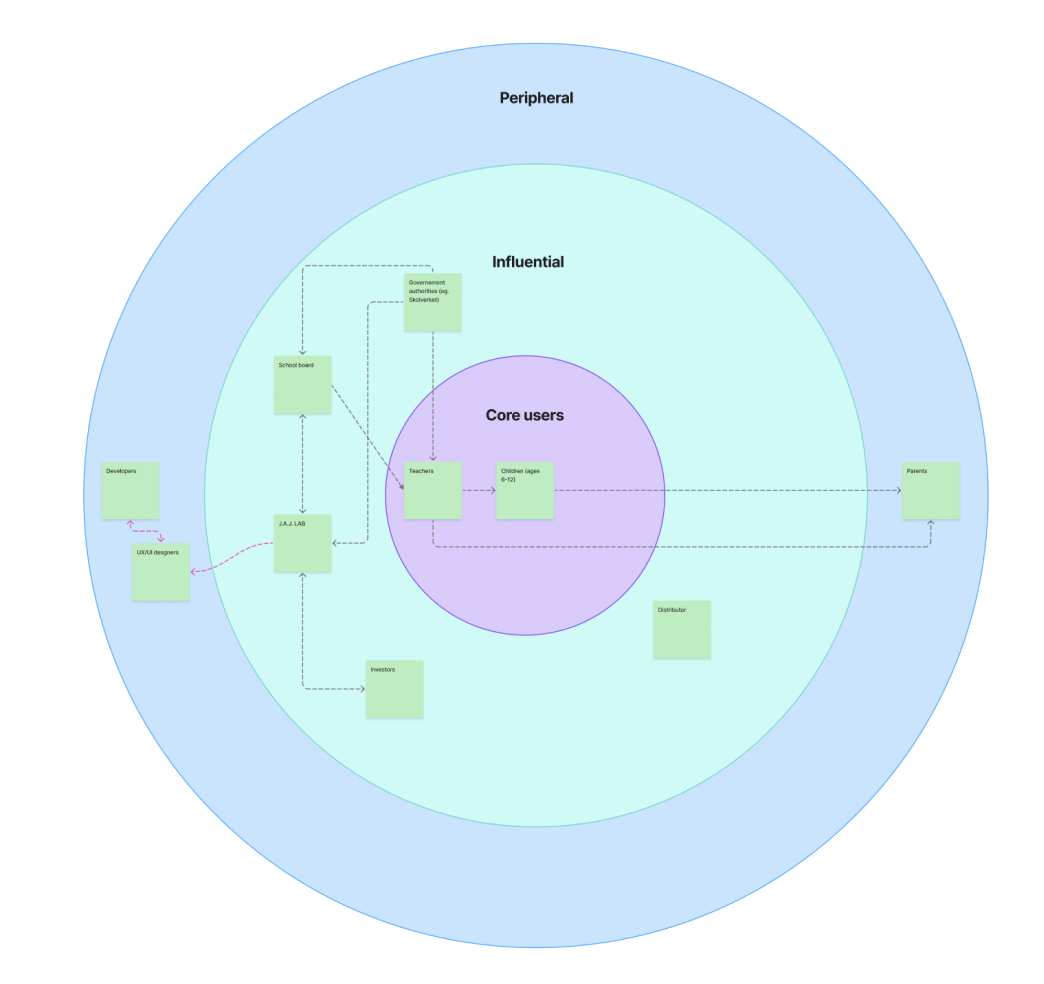
Generative Research
Conducted stakeholder mapping, competitor benchmarking, and in-depth qualitative interviews with both teachers and students.
Key Insight
Teachers were overwhelmed by juggling multiple platforms for planning and teaching, while students felt existing tools were functional but lacked creative, interactive engagement.
Synthesis & Definition
User Modeling
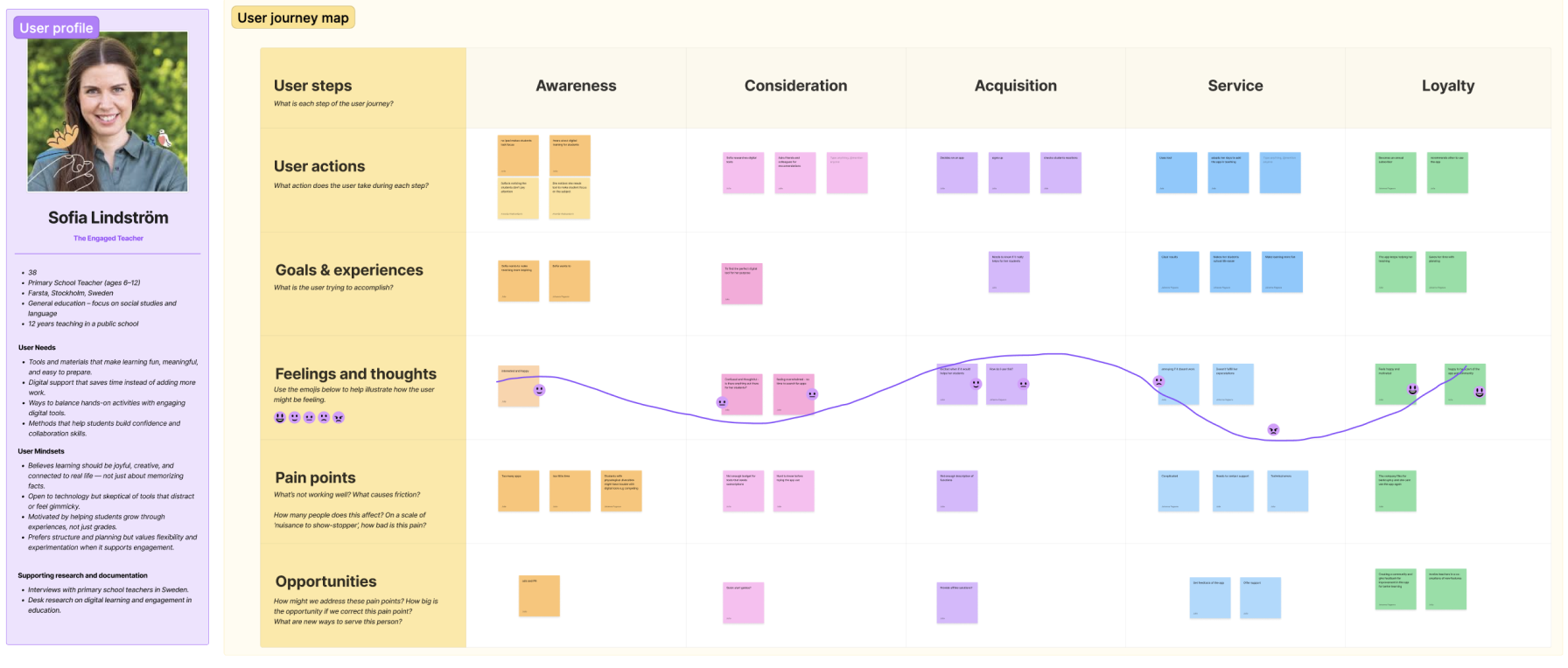
Developed core personas (the "Thoughtful Learner" and the "Engaged Teacher") and mapped the end-to-end user journey to pinpoint critical friction areas in lesson preparation and classroom reflection.
Reframing the Problem
Translated journey pain points into targeted "How Might We" statements focused on minimizing prep time, maximizing playfulness, and capturing real-time student needs.
Sense-Making
Distilled qualitative data using affinity mapping to uncover core themes. AI tools (ChatGPT, Phantom) were utilized to speed up transcription, clarify themes, and articulate behavioral patterns.
How Might We?
How might we help teachers plan lessons more quickly and with less effort?
How might we make digital learning more playful, interactive, and motivating?
How might we help teachers understand student needs in real time?
Ideation & Early Validation
Rapid Concepting
Utilized frameworks like Crazy 8s and 6-step storyboarding to generate and visualize solutions rapidly. Storyboarder.ai was used to quickly build context scenarios.
Stress-Testing
Validated the core value proposition early using the "Cereal Box" framework and the "Mom Test" methodology to gather honest, behavior-based feedback rather than subjective opinions.
Prototyping & Iterative Testing
Low-Fidelity & Flows
Mapped user flows and drafted low-fidelity prototypes to establish the product's core architecture.
Lean Usability Testing
Conducted early testing on low-fidelity models. Feedback revealed that while the concept was strong, the interface suffered from messy visual hierarchy, unclear navigation, and a disjointed flow.
High-Fidelity Refinement
Iterated heavily based on user feedback, establishing a stronger visual hierarchy, intuitive navigation, and a cohesive, calming UI.
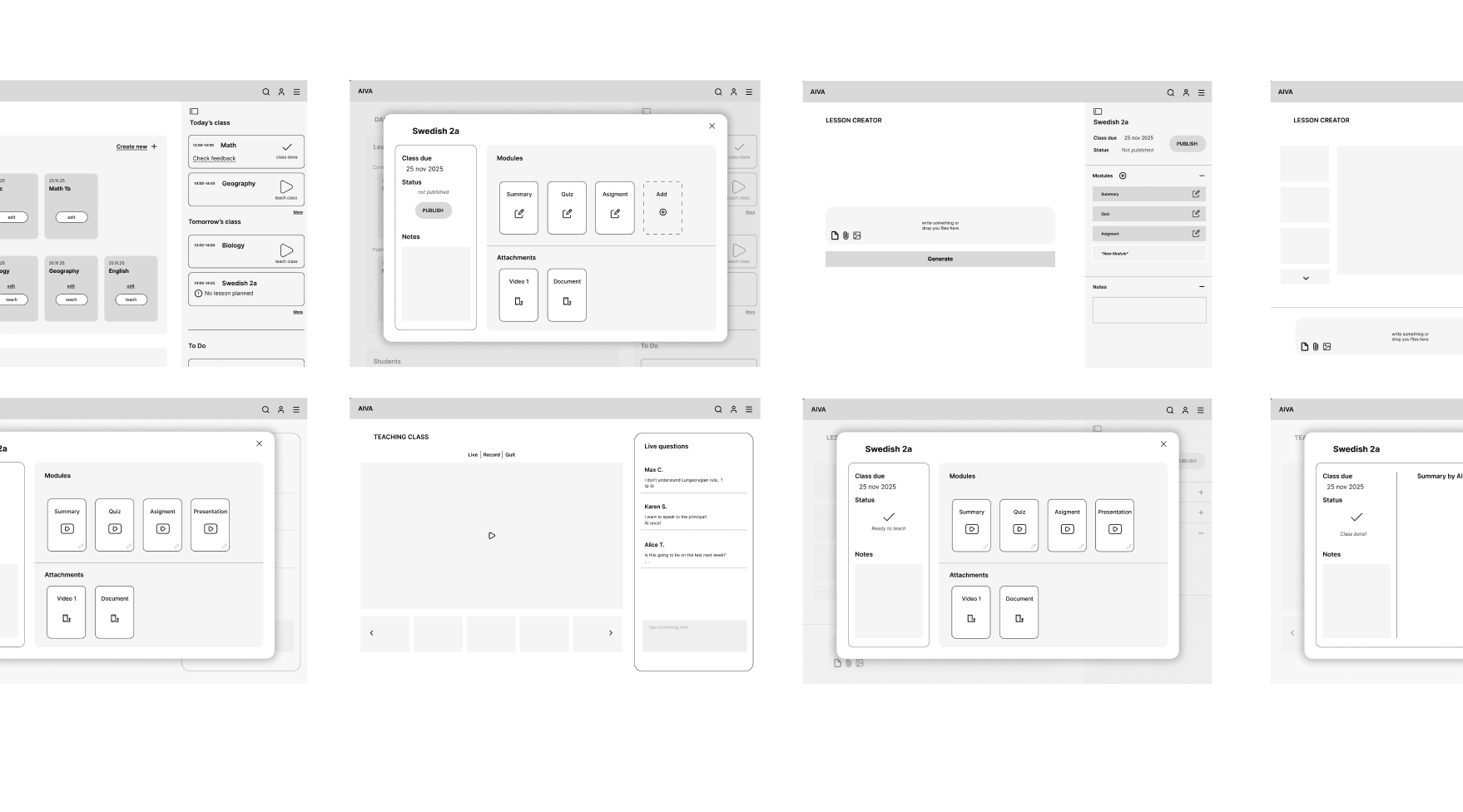
Low-Fidelity Prototypes
Early wireframes focused on information architecture to ensure the dashboard wasn't cluttered. However, it felt too utilitarian, like a spreadsheet.
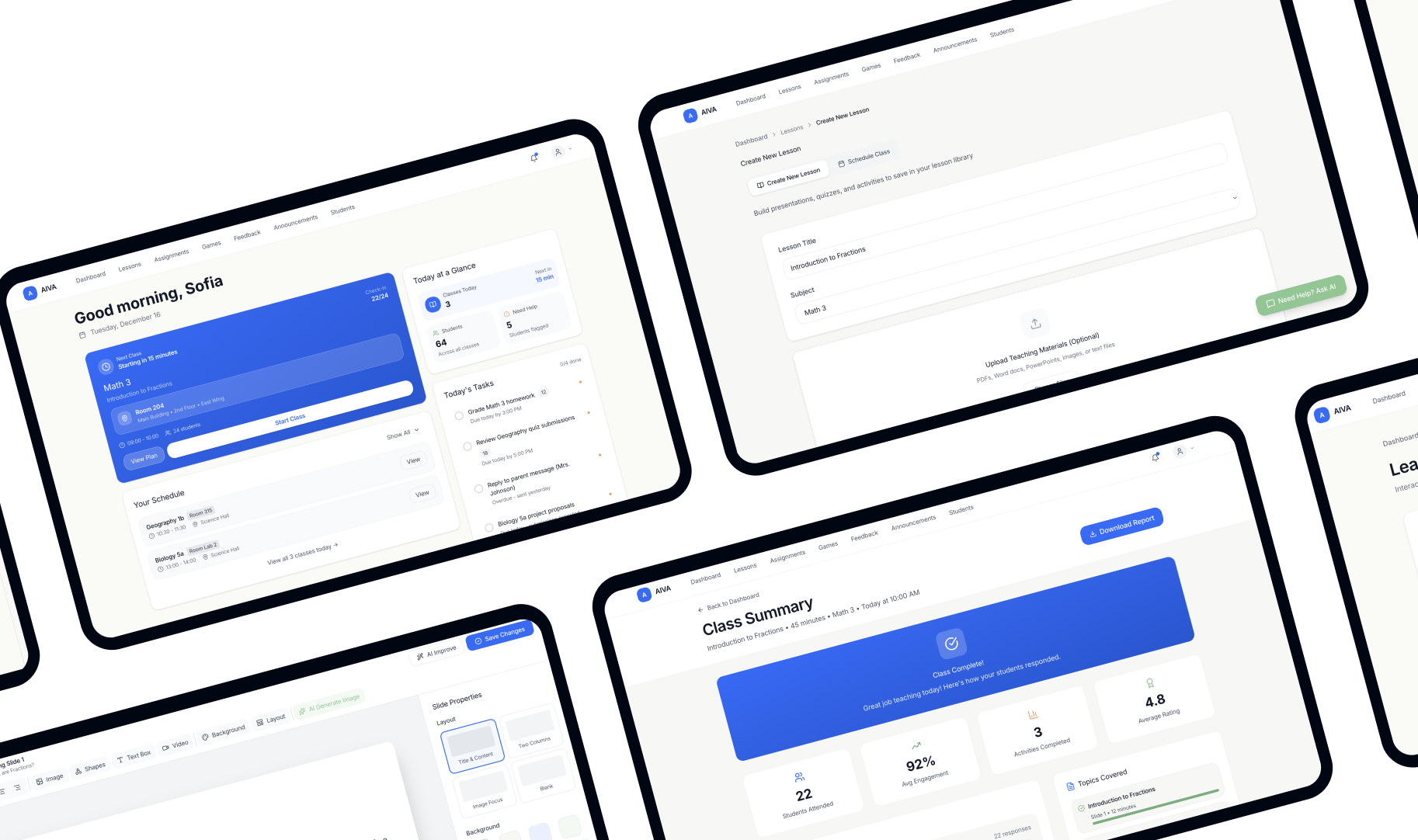
High-Fidelity Interface
The final design introduces warmth through rounded corners, soft typography, and the friendly Aiva avatar. The dashboard now prioritizes "What's Next?" to guide users gently.
The Outcome
The process culminated in AIVA, an all-in-one AI virtual assistant. The platform unifies lesson generation, interactive teaching, and automated student feedback into a single, seamless workflow — ultimately reducing teacher burnout while making learning highly accessible and engaging for students.
Unified Workflow
One platform for lesson planning, teaching, and feedback — eliminating tool-juggling.
Teacher Relief
Reduces administrative burden by up to 60%, freeing time for meaningful student interaction.
Student Engagement
Interactive, playful learning experiences that prioritize creativity and collaboration over rote memorization.